

 admission@niet.co.in
 +91-8010-500-700
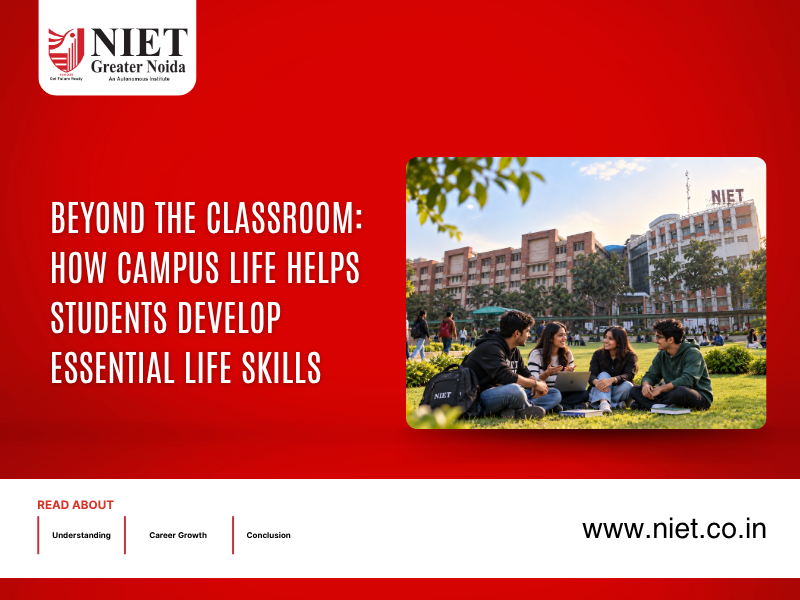
College education is often associated with lectures, assignments, and examinations, but some of the most valuable learning can happen outside the classroom. From working with classmates on an event to joining a student club or managing multiple responsibilities, everyday college experiences can teach lessons that textbooks may not fully capture.
Campus life gives students opportunities to interact with different people, take responsibility, explore interests, and respond to unfamiliar situations. These experiences can contribute to the development of life skills that remain relevant during college and beyond.
Learning to Communicate With Different People
College brings together students with different backgrounds, interests, and perspectives. Classroom discussions, group activities, clubs, and informal interactions require students to communicate with people who may think differently from them.
Over time, these experiences can help students learn how to express ideas clearly, listen to others, and handle differences of opinion respectfully.
Communication is not simply about speaking confidently. It also involves understanding when to listen, how to give feedback, and how to adjust communication according to the situation.
Teamwork Becomes a Real Experience
Teamwork can be difficult to understand through theory alone. Campus life gives students opportunities to experience it through group projects, competitions, student clubs, cultural activities, and technical events.
Working with others means dividing responsibilities, managing disagreements, and completing tasks within deadlines. Students may also discover that successful teamwork requires reliability and accountability, not just individual ability.
At Noida Institute of Engineering and Technology, Greater Noida, academic, technical, cultural, and extracurricular activities create opportunities for students to interact and collaborate beyond regular classroom learning. Participating in such activities can help students experience teamwork while developing interpersonal and organisational skills.
Managing Time and Responsibilities
College students often balance lectures, assignments, examinations, projects, extracurricular activities, and personal commitments.
Managing these responsibilities can gradually teach students how to prioritise tasks and use their time effectively. Missing a deadline or taking on too many commitments can also become a learning experience.
As students become more independent, they learn to decide what requires attention first—an ability that can remain useful in professional environments where several responsibilities may need to be managed simultaneously.
Developing Confidence Through Participation
Confidence does not always develop from academic performance alone. Sometimes it grows when a student participates in an event, presents an idea, organises an activity or tries something unfamiliar.
Campus activities can provide relatively accessible opportunities for students to move beyond their comfort zones. A student who initially avoids public speaking, for example, may gradually become more comfortable after participating in presentations, competitions or club activities.
The objective is not for every student to become highly outgoing. It is about developing enough confidence to participate, communicate, and take initiative when required.
Learning Leadership by Taking Responsibility
Leadership in college does not necessarily mean holding an official position. It can begin with taking responsibility for a small part of a project or helping a team complete an activity.
Student clubs, events, and collaborative initiatives can give learners opportunities to coordinate tasks, make decisions, and work with others towards a shared objective.
These experiences can also teach an important lesson: leadership involves accountability. When plans change, or problems arise, students learn to respond rather than simply wait for someone else to solve the situation.
Problem-Solving Beyond Textbook Questions
Real situations rarely come with predefined answers.
An event may face a last-minute change, a team member may be unavailable, or a project may not work as expected. Situations like these require students to assess the problem and consider practical alternatives.
Experiencing such challenges can strengthen adaptability and problem-solving. Students begin to understand that making progress sometimes involves working with incomplete information and adjusting plans along the way.
Building Connections and Discovering New Interests
One of the most valuable aspects of college can be the people students meet. Peers, seniors, faculty members, alumni, and industry professionals can introduce students to different experiences and perspectives.
Campus activities can also help students discover interests they may not encounter through their regular coursework. Technical events, sports, cultural activities, entrepreneurship initiatives, and student organisations can expose them to different roles and responsibilities.
For students experiencing campus life at NIET Greater Noida, participation across such activities can complement academic learning by creating opportunities to interact, collaborate, and explore interests beyond their chosen programme.
A technology student, for instance, may discover an interest in entrepreneurship, while another may realise that they enjoy organising teams, presenting ideas, or managing events. Such experiences can contribute to greater self-awareness.
Conclusion
College is not only a place to earn a qualification. It is also an environment where students can learn how to communicate, collaborate, manage responsibilities, solve problems, and become more independent.
The value of campus life often lies in these everyday experiences. A project that goes wrong can teach adaptability, an event can develop teamwork, and a new responsibility can build confidence.
Students who actively participate in college life can therefore graduate with more than academic knowledge. They can also carry forward practical life skills that help them navigate workplaces, relationships, and new challenges with greater confidence.
FAQs
1. Why is campus life important for students?
Campus life gives students opportunities to interact with others, participate in activities, and develop skills such as communication, teamwork, confidence, and time management.
2. What life skills can students develop through campus life?
Students can develop communication, leadership, teamwork, problem-solving, adaptability, time management, and interpersonal skills through different college experiences.
3. How do extracurricular activities contribute to student development?
Extracurricular activities allow students to explore interests, work with teams, take responsibility, and gain experiences beyond academic learning.
4. Can campus life help students prepare for their careers?
Yes. Group activities, projects, events, and student initiatives can help students strengthen communication, collaboration, problem-solving, and organisational skills that are useful in professional environments.
5. How can students make the most of campus life?
Students can participate in clubs, events, competitions, sports, technical activities, and collaborative projects while maintaining a balance between academics and extracurricular involvement.