
 admission@niet.co.in
 +91-8010-500-700
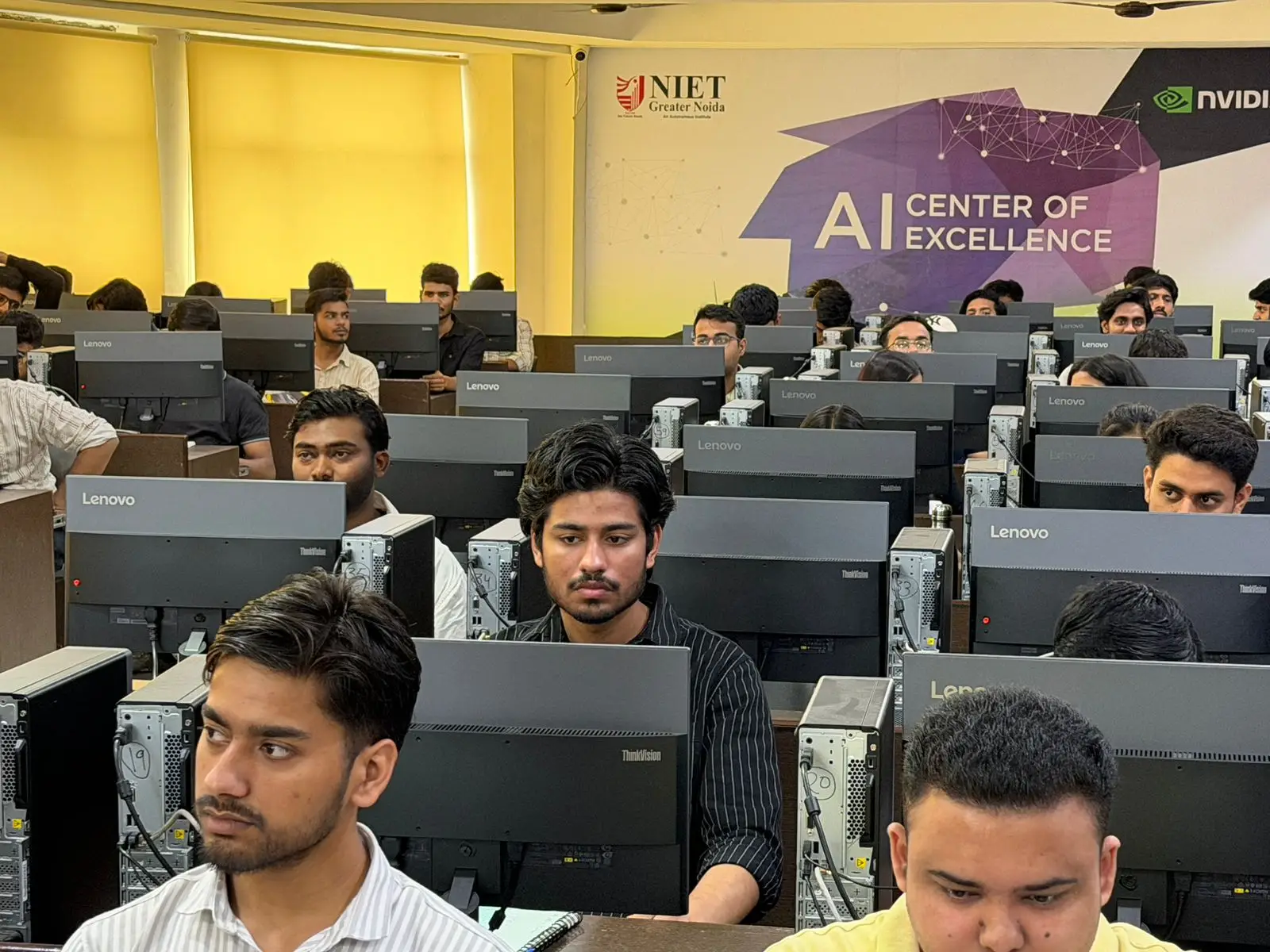
AI Centre of Excellence

Motivation
Artificial Intelligence has rapidly evolved into a mainstream technology, transforming industries across the globe. From education and healthcare to banking, finance, and digital services, AI is reshaping how organizations operate and innovate.
While AI is often surrounded by both high expectations and misconceptions, its real strength lies in its ability to enhance efficiency, automate processes, and enable data-driven decision-making.
Industries, particularly in the service sector, are leveraging AI at scale. Even domains such as web design and development are being significantly transformed, with AI enabling advanced design automation, intelligent coding, and faster development cycles.
This widespread adoption highlights the need for institutions to equip students with practical AI skills aligned with evolving industry demands.
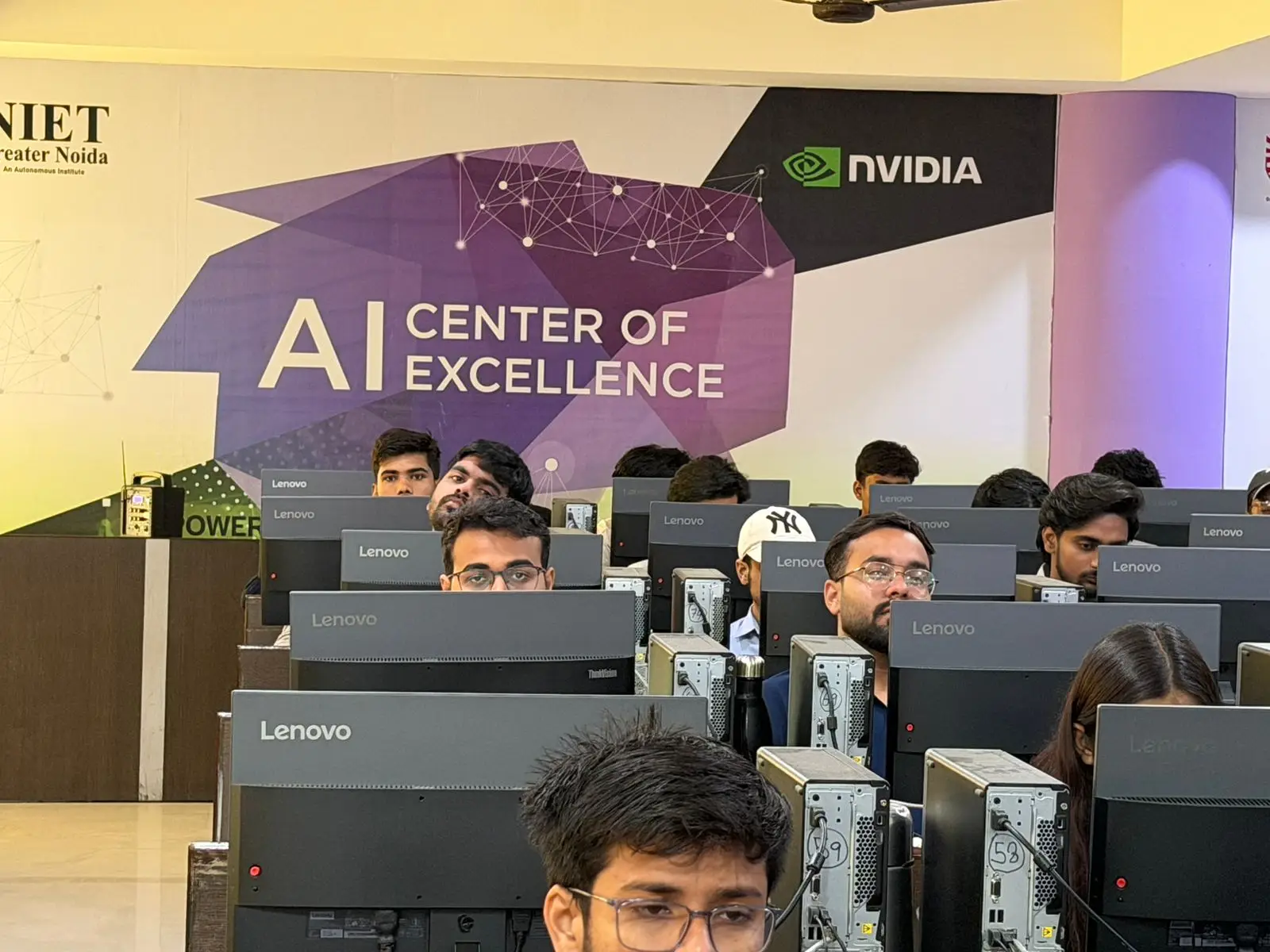
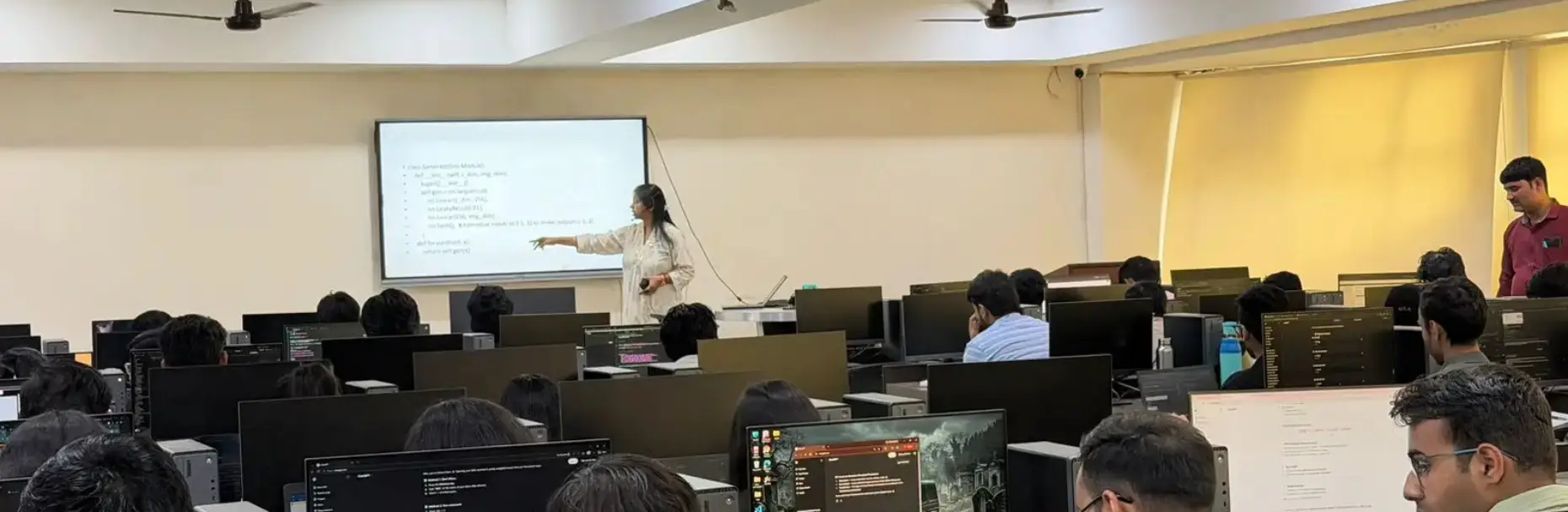
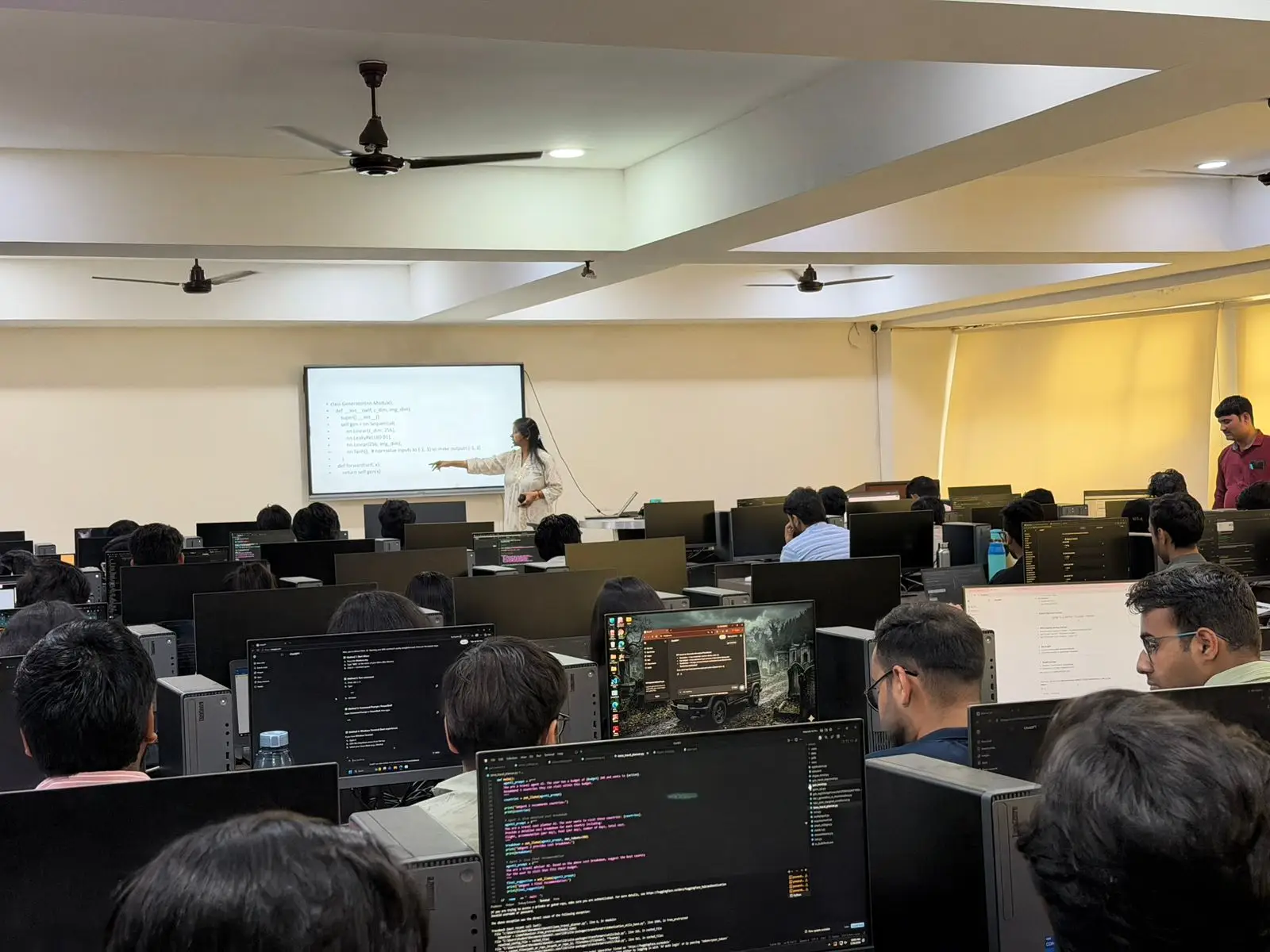
NIET’s AI Centre of Excellence has been built to address this challenge through a fully operational GPU-powered platform where students can move beyond theory and build, train, and deploy real AI models from day one.
Software, Dataset & Platform
Platform Infrastructure
The AI CoE is built on a cloud-based Kubernetes cluster powered by NVIDIA H100 GPUs. Every tool is pre-configured, allowing students to log in and start working immediately without environment setup.
Everything You Need, Already Waiting
Every tool, library, and framework required to build, train, and deploy AI models is pre-installed and production-ready. From data processing and model development to visualization and scalable computing, the entire AI stack is ready from day one.
Outcomes
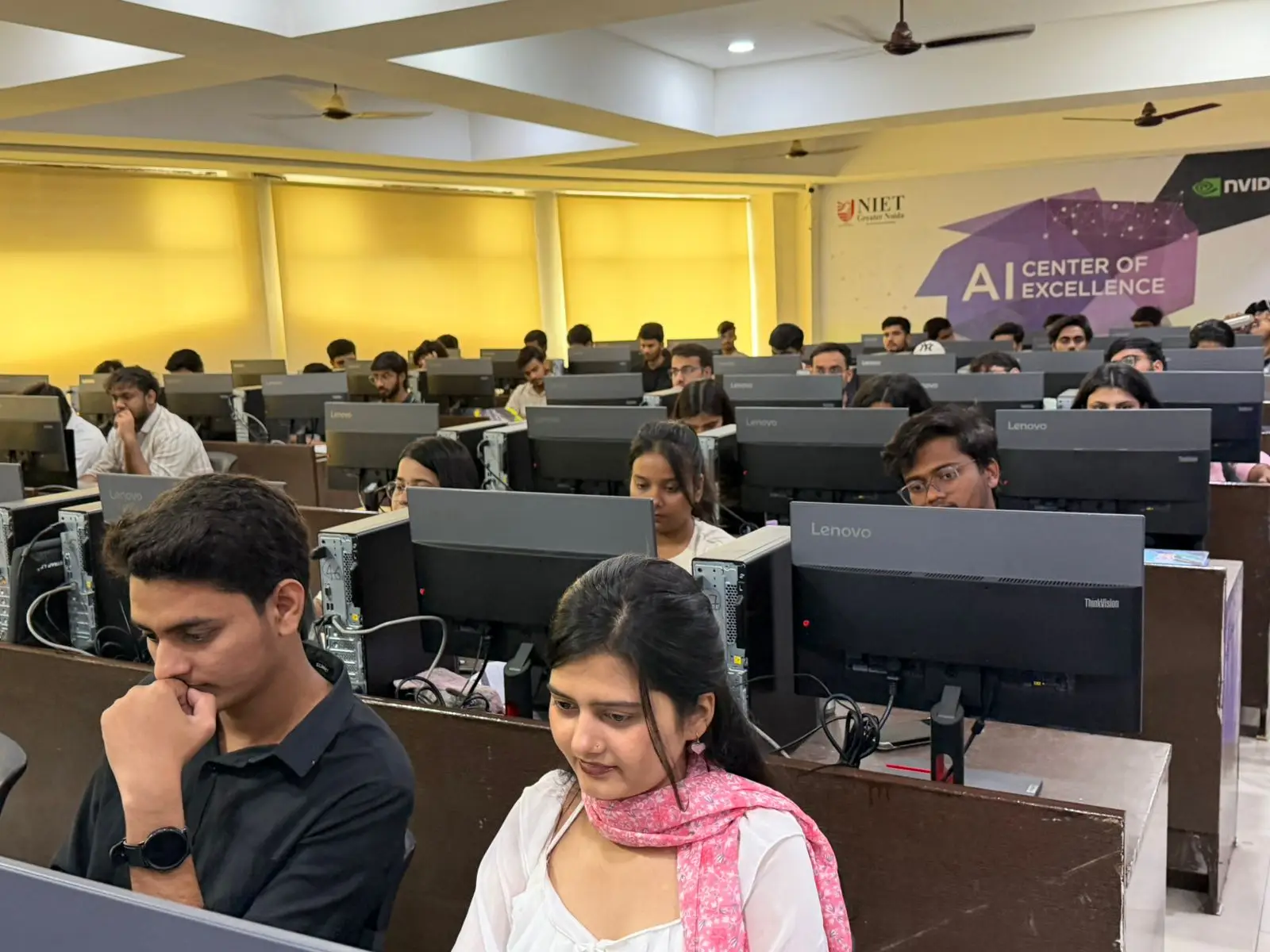
Through hands-on engagement with the NIET AI CoE platform, students develop strong practical capabilities aligned with real-world industry requirements.
Model Development: Students work with state-of-the-art models such as Mistral-7B, applying LoRA and QLoRA techniques to fine-tune them on domain-specific data. This allows a general-purpose model to evolve into a specialized system capable of solving domain-focused problems.
Real Dataset Exposure: Rather than working on simulated examples, students train models on real datasets including clinical records, customer interactions, financial transactions, and research data. The NVIDIA H100 GPUs handle intensive workloads that are otherwise not feasible on standard systems.
Experiment Tracking and Learning: Every training run is automatically logged using MLflow, capturing parameters, performance metrics, and model versions. Students learn to analyze outcomes, compare experiments, and reproduce results-an essential skill in AI development.
Build AI-Powered Applications
Students extend beyond model training to deploying AI models into real-world applications using the platform’s vLLM REST API.
This enables them to create practical solutions such as intelligent chatbots that handle student queries, medical symptom analysis tools, automated code review systems, and legal document summarization platforms.
They can also build multilingual customer support agents trained on business-specific knowledge bases, plagiarism detection systems for academic use, agriculture-focused crop disease identification tools, and healthcare-oriented drug interaction checkers.
Each application reflects how AI is used in real environments, helping students understand integration, scalability, and usability of intelligent systems.
Industry-Relevant Skills
Every stage of the workflow mirrors industry practices-from model selection and fine-tuning to experiment tracking, API deployment, and model storage-ensuring students graduate with hands-on experience directly applicable to careers in AI, machine learning, and data science.
Key Platform Components
Personal Notebook Workspace (JupyterHub): A browser-based, isolated workspace with all AI libraries pre-installed, ensuring seamless access for every student.
AI Model Training: Capability to fine-tune large language models such as Mistral-7B on custom datasets using efficient techniques like LoRA and QLoRA.
Experiment Tracking (MLflow): Automatic logging of training parameters, metrics, and model versions for better analysis and reproducibility.
Model Storage (MinIO): Secure and persistent storage system for datasets and trained models.
Fast Inference (vLLM API): Enables quick predictions and seamless integration of AI models into applications.
Utilization
NIET is progressively integrating Artificial Intelligence and Machine Learning across academic and operational domains to enhance efficiency, accuracy, and innovation.
Machine learning systems enable computers to learn from data patterns without explicit programming, supporting intelligent decision-making and reducing human errors.
These technologies complement human capabilities by automating repetitive tasks and providing deeper insights through data analysis.
The AI CoE ecosystem empowers students and faculty to leverage AI for research, innovation, and real-world problem-solving.
Students can:
Train custom AI models on domain-specific data
Run fast inference and embed AI into applications
Track, compare, and reproduce experiments
Store models securely and collaborate effectively